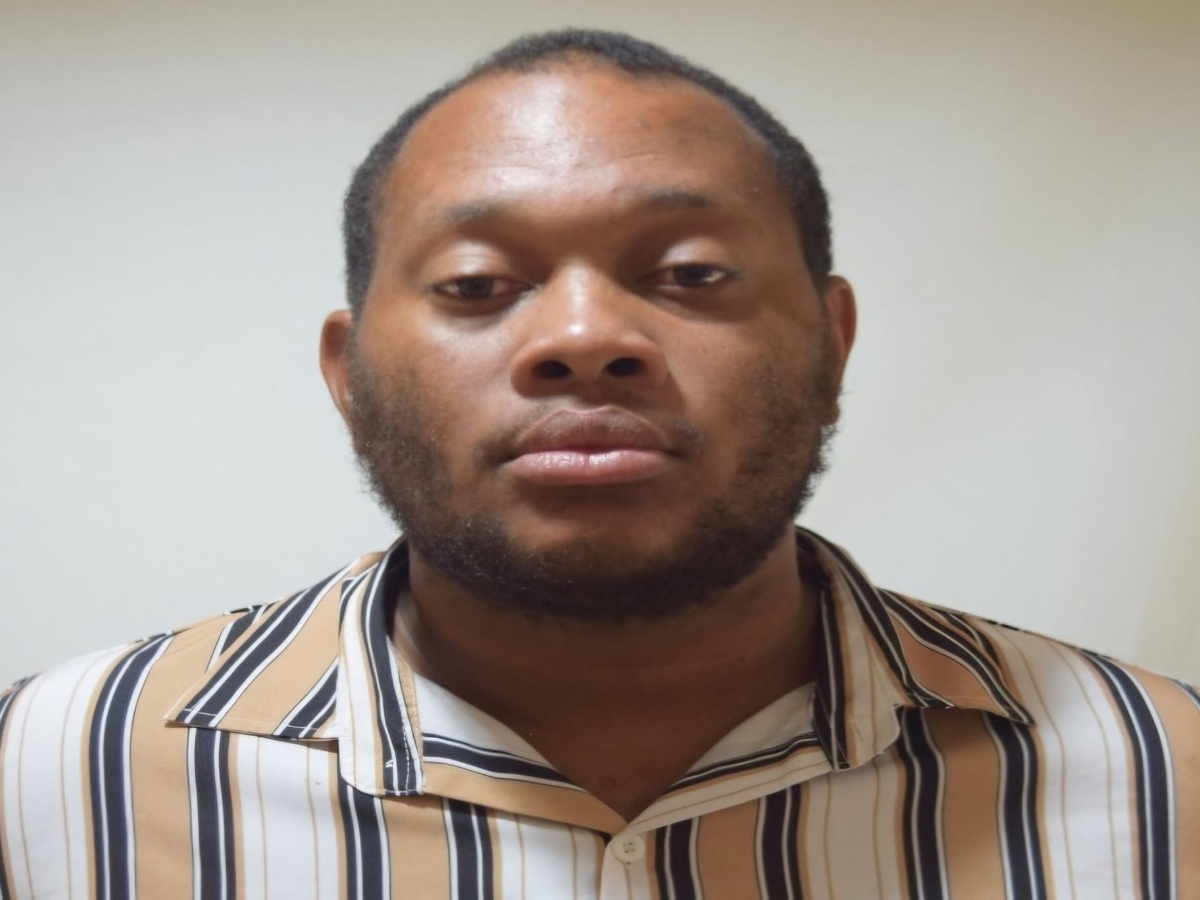
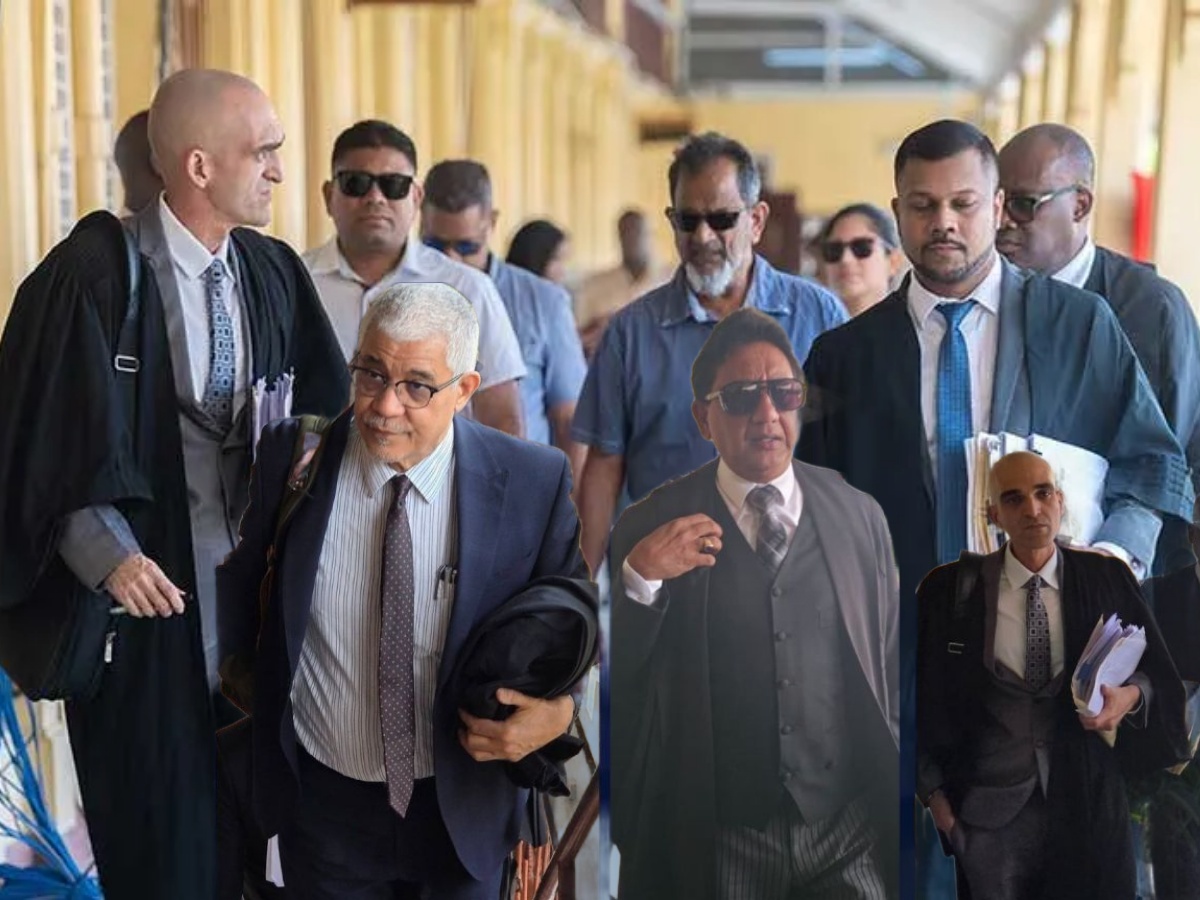
A judicial review hearing unfolded in the High Court on Wednesday, focusing on the extradition process involving US-indicted businessmen Azruddin and Nazar Mohamed. Senior Trinidadian attorney Douglas Mendes, SC, and the Attorney General’s Chambers were placed at the center of a robust legal debate addressing issues of bias, political influence, and the extent of ministerial power.
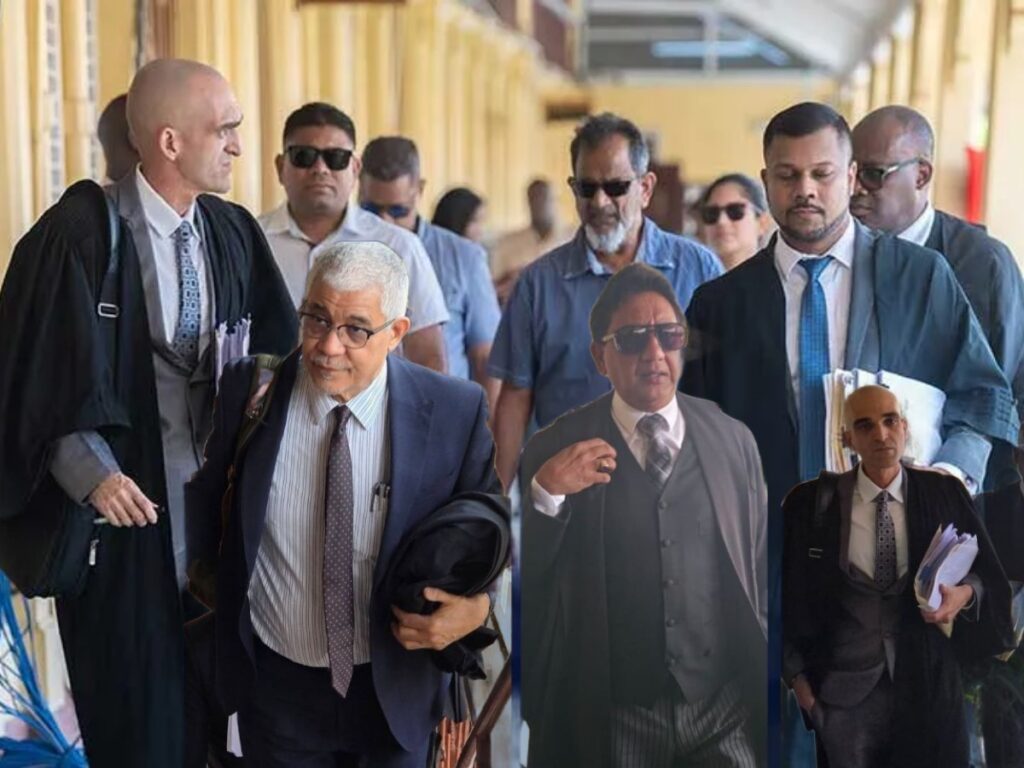
The Mohameds are contesting the Authority to Proceed (ATP) issued by the Minister of Home Affairs under the Fugitive Offenders Act, which paves the way for their extradition to the United States. Additionally, they are challenging the constitutionality of recent amendments to the Act.
Acting Chief Justice Navindra Singh is overseeing the proceedings, which lawyers argued could have significant implications, despite the Chief Justice characterizing the matter as dealing with “very narrow issues.” During extensive oral presentations, the court heard arguments from both sides.
The Mohameds’ legal team, composed of Attorneys Roysdale Forde, Siand Dhurjon, and others, contend that the ATP was influenced by political bias from both the Minister of Home Affairs, Oneidge Walrond, and the Attorney General. Dhurjon emphasized the importance of constitutional fairness, presenting public statements made by political leaders between June and August 2025 that allegedly portrayed the Mohameds as criminals long before the ATP was issued.
“The timing is critical,” Dhurjon argued, indicating that the ATP was issued shortly after these public pronouncements. He claimed that while the Minister wasn’t named in the US indictment, her alignment with a political body acting as a pressure group rendered her actions akin to those of a prosecutor.
Dhurjon also noted that the vast majority of the alleged criminal conduct occurred in Guyana, suggesting that this should bar extradition under the law. He maintained that the Minister failed to disregard the prejudicial political statements while issuing the ATP, pointing out that bias may be unconscious.
In defense of the Minister, Senior Counsel Mendes rejected these bias allegations and urged the court to dismiss the application. He contended that the uncertainties surrounding which statements were referenced did not equate to dishonesty. Mendes framed the minister’s decision as inherently political, arguing the issuance of the ATP merely initiates a process rather than determines guilt or extraditability.
“They make no binding decision at this stage,” Mendes stated, stressing that applicants waived any right to object on grounds of bias by engaging with the Minister without prior objections.
The Attorney General, Anil Nandlall, SC, contended that the extradition process is an executive government-to-government matter and criticized the judicial review as premature and lacking merit. He argued that interfering with the extradition process through judicial review would undermine its integrity.
Nandlall warned that allowing satellite litigation to disrupt the main proceedings could risk rendering them ineffective. He emphasized that the applicants’ claims hinge on the assertion that the government cannot extradite them solely due to their political opposition to the administration.
Representing Magistrate Judy Latchman, attorney Goosai asserted that Latchman had no authority to question the validity of the ATP, which legally bound her to proceed once issued.
In rebuttal, Dhurjon dismissed the argument that the applicants should await the committal hearing’s outcome, maintaining that they have the right to challenge potential unconstitutionality in real-time.
At the conclusion of the submissions, Chief Justice Singh directed that all parties file and exchange cited authorities by January 19, indicating that he would deliver his ruling on February 2. The case continues to raise critical questions about the intersection of politics and the legal extradition process in Guyana.