Attorney General to lead international legal team as landmark case enters critical stage
The International Court of Justice (ICJ) will begin oral hearings on Monday, May 4, in the long-standing border controversy between Guyana and Venezuela, a case widely regarded as one of the most significant in the country’s history.
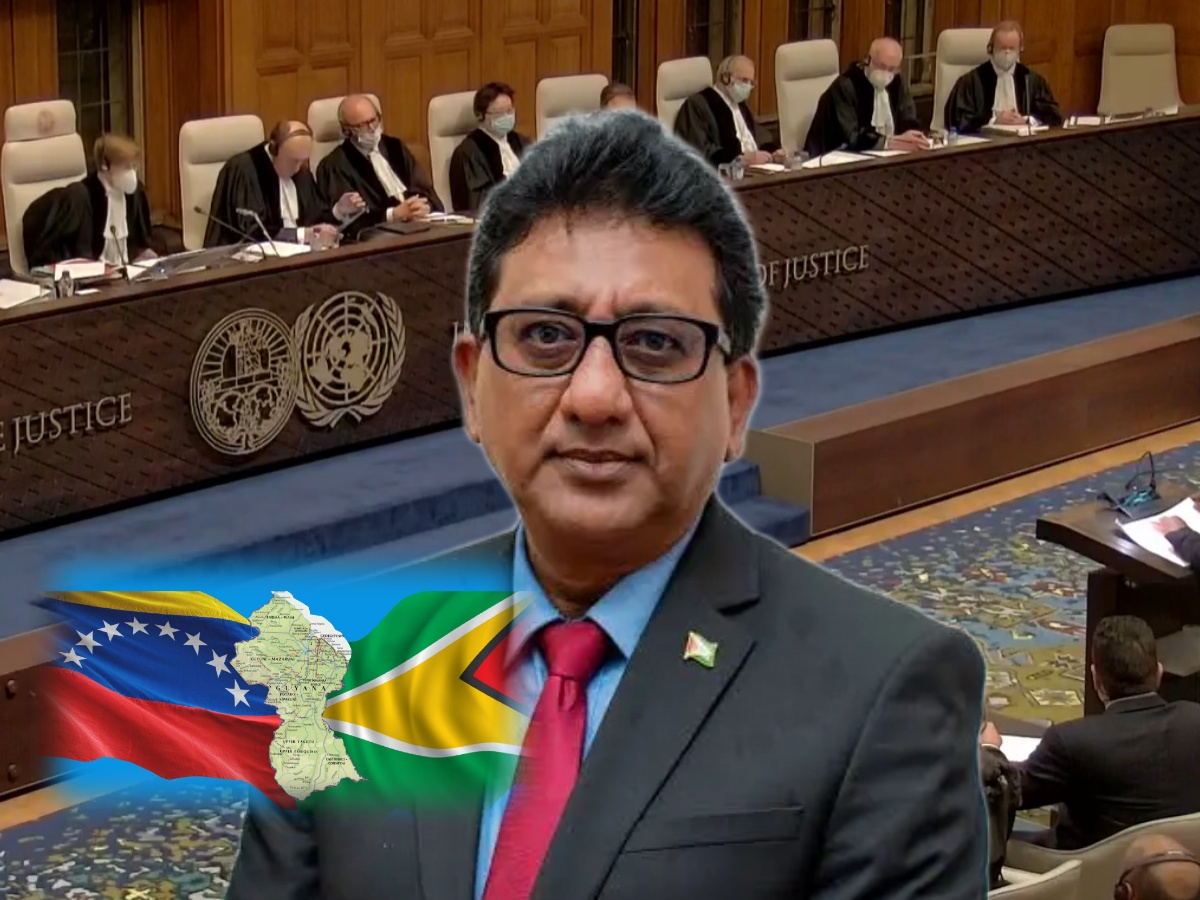
Attorney General and Minister of Legal Affairs, Mohabir Anil Nandlall, SC, made the announcement on his weekly podcast “Issues in the News,” revealing that the hearings are scheduled to run from May 4 to 8 and are anticipated to extend into the following week. Minister Nandlall will lead a team of international legal experts in defending Guyana’s territorial rights before the court.
The hearings mark a critical stage in Guyana’s pursuit of a final, peaceful, and legally binding resolution to the decades-old dispute over the Essequibo region, a territory that comprises more than two-thirds of Guyana’s landmass.
Guyana brought the matter before the ICJ in 2018, seeking confirmation that the 1899 Arbitral Award, which definitively established the boundary between the two countries, is valid and legally binding. That award was accepted and respected for over 60 years before Venezuela, in 1962, declared it null and void and renewed its claims to the territory.
The case is being heard under the framework of the 1966 Geneva Agreement, which provides the mechanism for a peaceful resolution of the controversy. Following years of failed bilateral efforts, the matter was referred to the ICJ by the United Nations Secretary-General.
In a significant procedural development, the court has already ruled that it has jurisdiction to hear the case, clearing the way for the current hearings on the merits, where both countries will present their full legal arguments. Written pleadings were completed in 2025, and the upcoming sessions will see both sides advance oral arguments before the bench.
Guyana has consistently maintained that the judicial process is the only legitimate path to resolving the controversy. Venezuela has historically challenged the court’s authority, though it has since participated by filing written submissions.
A final judgment from the ICJ is expected to be binding on both countries, bringing long-awaited legal clarity to one of the most consequential territorial disputes in the Western Hemisphere.