





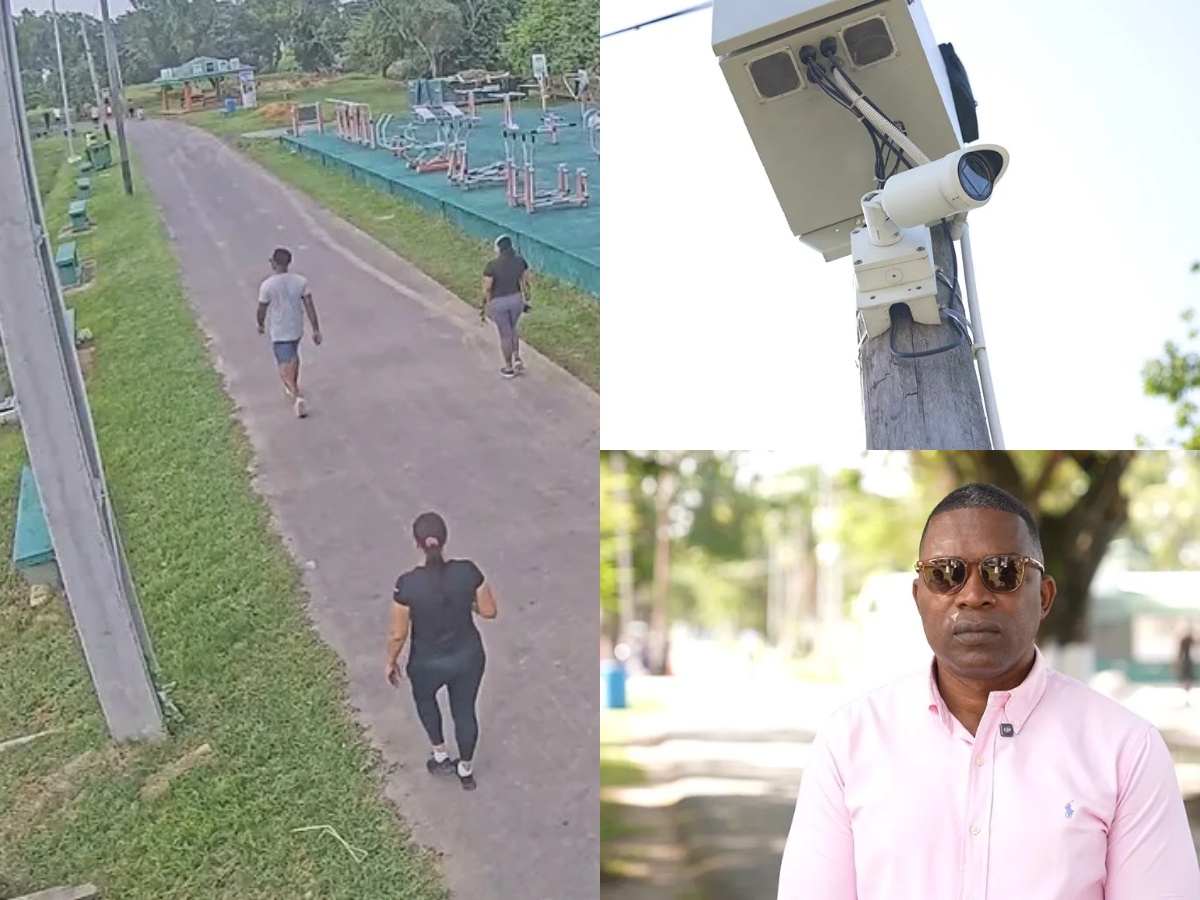
The Protected Areas Commission (PAC) has begun installing CCTV cameras at the National Park as part of an initiative to deter petty crime and improve monitoring throughout the public space.
Mark Lewis, the Security Manager at the National Park, expressed his support for the initiative, stating that the addition of 17 cameras is a “really good initiative taken by the administration.” The cameras will provide security coverage across the park, focusing on vulnerable areas such as picnic spots, gathering locations, entrances, and parking lots.
While serious violent crime is not a prevailing issue, Lewis emphasized that the primary concern lies with opportunistic offenses. He described the types of crimes typically encountered: “It’s not guns, it’s not knives, but it’s petty thieves. Someone might be passing and snatch a phone… You’re wearing jewelry around the neck, they might snatch jewelry,” he explained. He noted that the park’s layout can sometimes make visitors easy targets due to the circuit formation, which may leave individuals isolated in certain areas.
Additionally, car break-ins remain a concern, especially when valuables are left visible inside vehicles.
Alongside their security functions, the cameras will also aid in environmental monitoring. Officers trained as litter wardens by the Environmental Protection Agency (EPA) will use the surveillance footage in conjunction with bike patrols to enforce anti-littering regulations. Lewis indicated that strict penalties exist for offenders, who can be cautioned based on surveillance evidence.
The installation of the cameras commenced in phases last year, with some delays attributed to power supply challenges. All 17 cameras are now under the management of Lewis’s team. In the event of an incident, footage can be shared with law enforcement under established protocols. “The Police have jurisdiction, and if warranted, they can obtain a copy of the footage,” Lewis confirmed.
This initiative signifies a crucial step forward in enhancing safety and security for all visitors to the National Park, making it a more secure environment for recreation and enjoyment.