






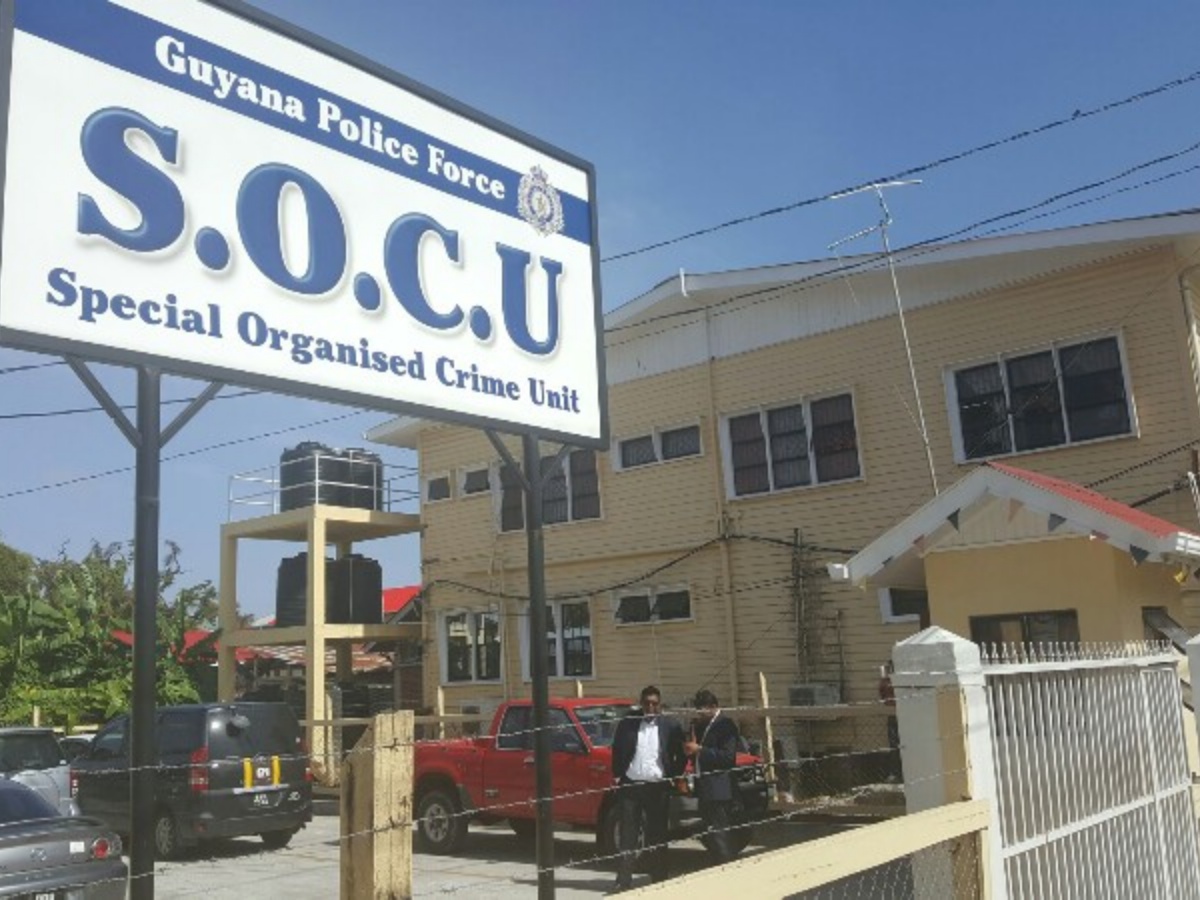
The Full Court has determined that the Special Organized Crime Unit (SOCU) of the Guyana Police Force has the legal authority to initiate legal actions in its own name. This ruling was issued by Justices Nigel Niles and Zamilla Ally-Seepaul on December 18.
The court found that the Anti-Money Laundering and Countering the Financing of Terrorism (AML/CFT) Act grants SOCU the ability to independently initiate and maintain legal proceedings. This decision effectively overturns a prior ruling made in May by High Court Judge Peter Hugh, who had struck out SOCU’s application to restrain and detain a significant amount of gold, foreign currency, and Guyanese dollars belonging to Sebastiao Moura and Gago Gold Inc. These items were suspected of being linked to money laundering.
Sebastiao Moura, a Brazilian national involved in gold mining in Guyana, has been charged with five counts of money laundering under the AML/CFT Act. The ongoing case is currently being heard in the Georgetown Magistrates’ Court.
The Attorney General’s Chambers explained that Justice Hugh’s decision stemmed from his ruling that SOCU lacked the capacity to initiate legal proceedings because it is not a body corporate according to the Companies Act, and the AML/CFT Act did not explicitly grant it that status.
However, the Full Court has now set aside this ruling. Attorney General Anil Nandlall argued that SOCU’s ability to initiate legal proceedings is critical for its statutory functions under the AML/CFT Act. He emphasized that the previous ruling would severely hinder SOCU’s capabilities in executing its mandate.
In its ruling, the Full Court aligned with the Attorney General’s arguments, stating that SOCU’s legal standing is of public importance and directly affects the efficient administration of the AML/CFT framework. The court concluded that there was no need for SOCU to possess corporate personality, as Parliament had explicitly conferred the necessary legal powers upon it as a competent authority to initiate and sustain legal actions.