




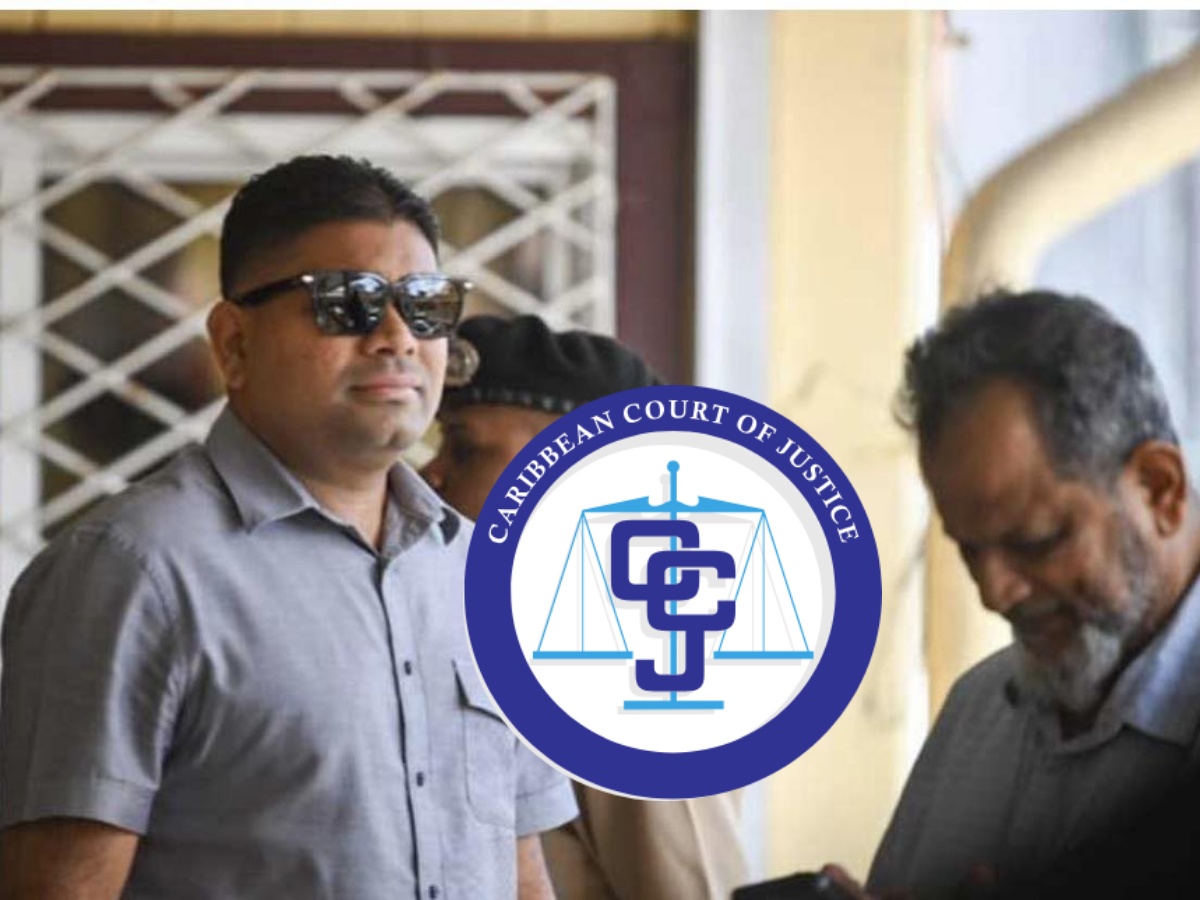
Businessmen Nazar Mohamed and his son Azruddin Mohamed also the country’s Opposition Leader have moved to the Caribbean Court of Justice (CCJ) seeking special leave to appeal a recent decision that cleared the way for their extradition proceedings to continue.
In an urgent application, the Mohameds are asking the CCJ to overturn Guyana’s Court of Appeal ruling issued last week, after the appellate court dismissed their challenge to the extradition process and upheld earlier findings of the High Court.
They are also seeking an immediate stay of the ongoing extradition hearings currently before Magistrate Judy Latchman, warning that the proceedings could be completed before their appeal is heard.
According to their filing, if the hearings are not paused, they could be committed to prison pending extradition, at which point bail would no longer be available. The Mohameds argue that allowing the process to proceed could make their CCJ appeal “meaningless” if extradition is completed first.
The case stems from a request by the United States made in October 2025 for the extradition of the father and son to face charges, including fraud and money laundering.
After the request, Minister of Home Affairs Oneidge Walrond issued an Authority to Proceed (ATP)—a legal requirement to begin extradition proceedings in Guyana.
The Mohameds challenged the ATP decision in the High Court, arguing it was tainted by political bias. That application was dismissed in February 2026, with the court ruling that the minister’s role was administrative, not judicial.
That finding was later upheld by the Court of Appeal on March 17, 2026, which held there was no evidence of bias and ruled that the issuance of the ATP could not be disqualified on that basis.
In their CCJ filing, the Mohameds argue that both lower courts erred in law and that the minister’s decision should be subject to scrutiny for bias. They contend that:
The issuance of the ATP significantly affects their rights and should not be treated as a simple administrative act
The courts failed to properly consider allegations of political bias
Public statements by senior government officials created a perception of prejudice
The Attorney General’s involvement in advising on the ATP may have tainted the process
They acknowledge that these points were rejected by the High Court and the Court of Appeal, with rulings delivered by the acting Chief Justice and later unanimously upheld by a Chancellor-led panel of the Court of Appeal.
The application also says the case raises major constitutional and legal questions, including whether political officials can initiate extradition proceedings against a political opponent without breaching fairness principles.
The filing emphasizes Azruddin Mohamed’s political role, noting that he became a Member of Parliament and leader of a major opposition party after the 2025 elections. It claims senior government officials publicly criticised the Mohameds before the extradition request, contributing to an alleged perception of bias.
The Mohameds also cite the pace of the extradition hearings, saying court dates have been scheduled in quick succession and the matter could conclude within weeks strengthening, they argue, the need for CCJ intervention.
As part of the CCJ process, the court has scheduled a Case Management Conference for March 25, 2026 to give directions on how the matter will proceed. The CCJ will then decide whether to grant special leave to appeal and whether the extradition proceedings should be paused while the appeal is considered.