
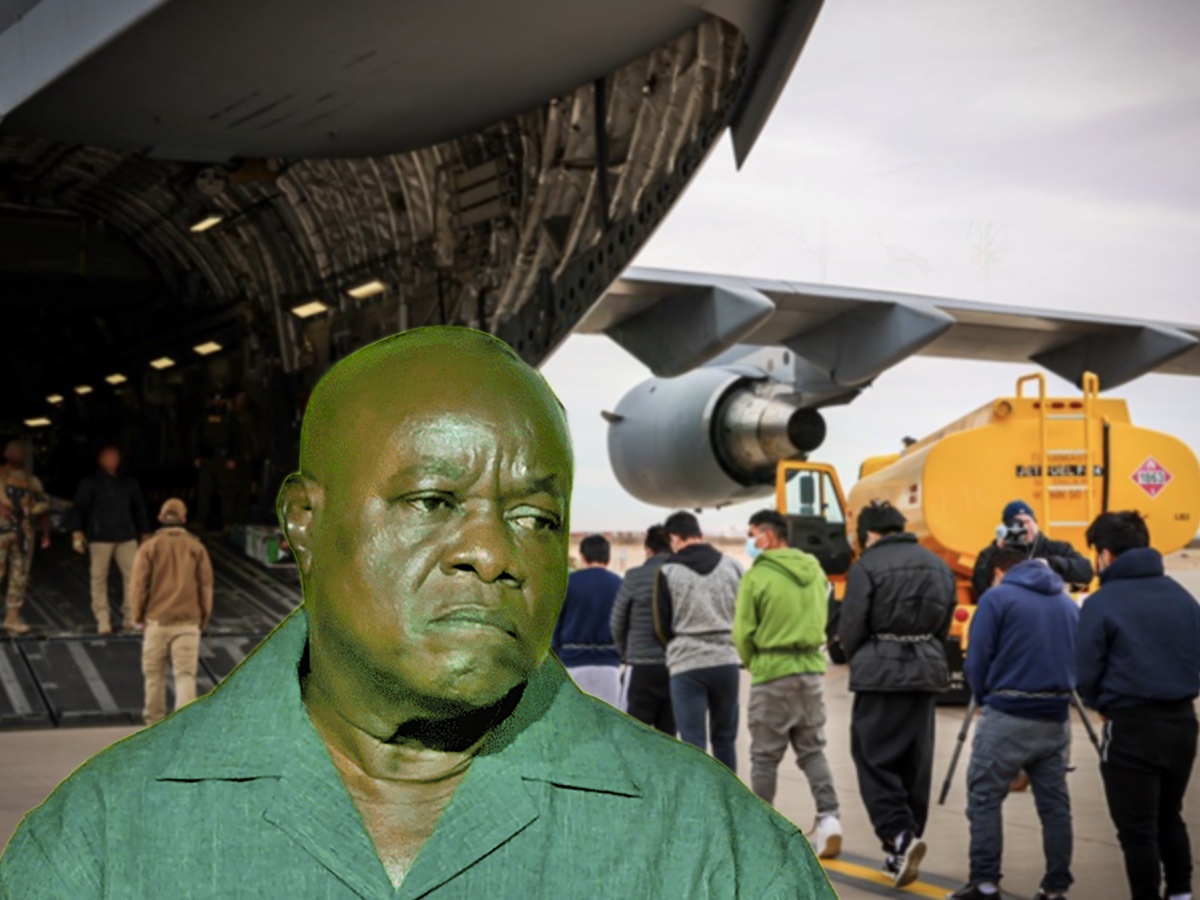
Aubrey Norton, Leader of the People’s National Congress Reform (PNCR) and Chairman of the APNU, has urged the Irfaan Ali Administration to suspend discussions with the U.S. concerning the acceptance of third-country deportees and refugees until national stakeholders are properly consulted and a comprehensive migration policy is established.
Third-country deportees and refugees refer to individuals being deported by the U.S. to a country other than their home nation. Reports surfaced on Tuesday indicating that Guyana is in advanced discussions with the U.S. government regarding an agreement to accept these deportees and refugees.
In an interview with News Source, Norton expressed concern over the lack of prior consultations before advancing these discussions. “I do not know that we have the capacity to screen, and what is worse, it is being done outside the context of a migration policy,” he stated. “We need to develop a migration policy that involves all stakeholders, including political parties, as it will ultimately impact Guyanese society.”
While Norton clarified that the PNCR is not opposed to migrants, he remains skeptical about the acceptance of third-country deportees and refugees. He emphasized that the PNCR is currently not inclined to support the proposed arrangement but is open to meaningful consultations to ensure a clear policy is established.
Under the proposed agreement, the U.S. would cover all costs associated with relocating those deported or seeking refuge in the U.S. but denied entry. Norton warned, however, that the costs could be significantly higher than estimated. “There is a need to analyze the costs involved. While the country may say they will pay, these costs are often unpredictable and could rise,” he cautioned.
Norton insisted that safeguards must be in place to ensure that no criminals are accepted and that the individuals allowed entry should possess a good educational background and contribute positively to Guyana’s development.
He raised concerns about the potential impact of migrants on the political landscape in a country with a small population. “If migrants can hold the balance of power in Guyana—they don’t need to be more numerous than Guyanese; they just need to hold the balance—they can influence political matters,” Norton said. “Additionally, as an oil-rich society, we must first ensure that our resources benefit the people of Guyana before considering how we can assist others.”
He reiterated that the needs of Guyanese citizens must always come first. According to sources, under the proposed arrangement, Guyana would retain the right to refuse any individuals identified for deportation from the U.S., with a preference for skilled applicants without criminal backgrounds.