
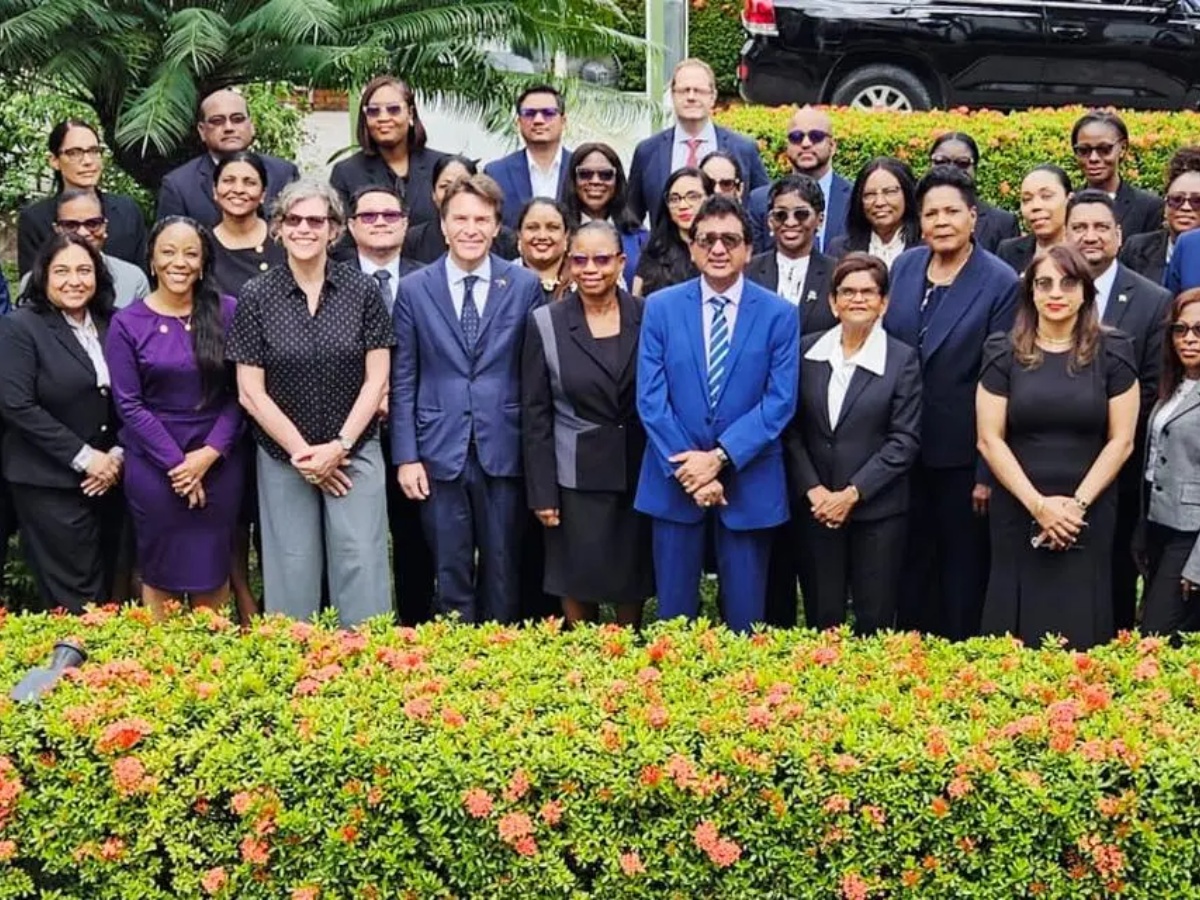
A four-day judicial training programme aimed at reducing criminal case backlogs and accelerating trials has been launched under the Partnership of the Caribbean and the European Union on Justice (PACE Justice) initiative.
Speaking at the opening ceremony on Monday, Attorney General Anil Nandlall said the programme directly targets long-standing delays in the criminal justice system, driven by systemic weaknesses including poor police data capture, paper-based evidence management systems and limited digitisation of corrections processes — bottlenecks that have hampered investigators, prosecutors and the courts alike.
“This training is timely because we all recognise that crime now perhaps more than ever assumes priority in the region… Crime is now accepted as a public health hazard in the Caribbean,” Nandlall said.
Acting Chancellor of the Judiciary Justice Roxane George said the training is designed to improve the efficiency with which criminal cases are handled and ensure timely hearings before the courts, keeping judicial officers at the cutting edge of their profession and maintaining the high standards of conduct embodied in the judicial code.
“Judicial education programmes will keep them on the cutting edge so that they maintain the high standards of judicial conduct embodied in the code of conduct,” she said.
European Union Ambassador to Guyana Luca Pierantoni emphasised that strengthening public trust in the justice system is central to improving its effectiveness, highlighting the importance of protecting victims and witnesses as a foundation for that trust.
“So the focus is rather on the issue of trust in the system, empowerment,” he said.
The training programme covers a wide range of topics including jury orientation, complex criminal trials, defences, no-case submissions, vulnerable witnesses, voir dire, DNA evidence, digital evidence and the role of artificial intelligence in the justice system.