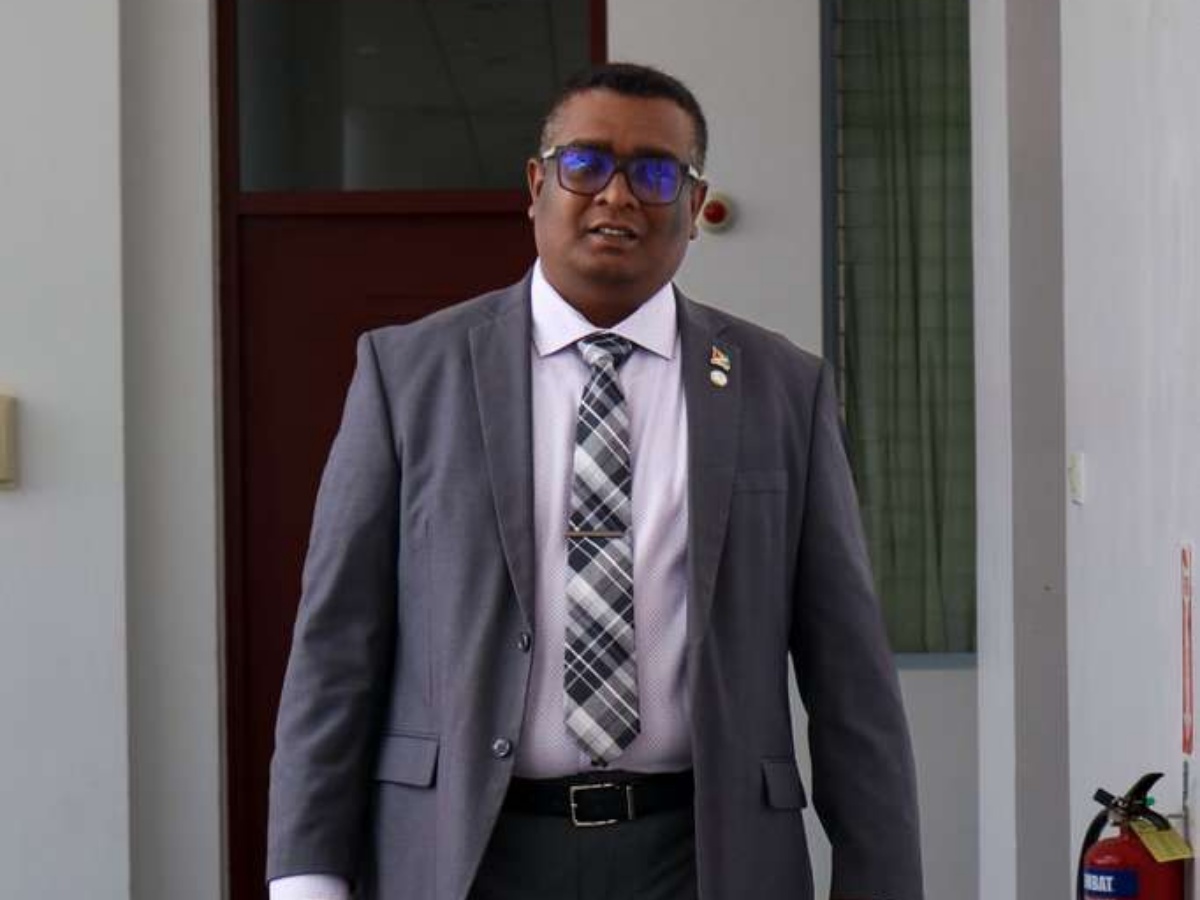

Minister of Foreign Affairs and International Cooperation, Hugh Todd, staunchly defended the government’s foreign policy during the National Budget Debate on Wednesday, directly responding to critiques from Forward Guyana Movement (FGM) Member of Parliament, Amanza Walton-Desir. Her call for an integrated foreign policy framework that addresses new and emerging challenges sparked a heated exchange.

Taking the floor, Todd dismissed Walton-Desir’s critique, asserting that she lacks experience in foreign relations and might have referred to basic texts on the subject. He highlighted an allocation of $10.035 billion in the budget for his ministry, which he described as an 88% increase over the past five years, underscoring the government’s commitment to advancing its foreign policy agenda.
“Our foreign policy is a key pillar for national development, social advancement, and economic growth,” Todd stated, emphasizing that effective policies are informed by data and empirical evidence. He criticized Walton-Desir’s alignment with opposition leader Azruddin Mohamed, who is facing extradition, suggesting that her actions undermine her capacity to critique the government.
He asserted that foreign policy is an ongoing endeavor that requires constant adaptation to the dynamic international landscape. “Foreign policy never stops. You have to continuously work at it, keep developing it, and executing it,” he noted, expressing confidence that Guyana’s successes have garnered positive responses from regional and international partners. Todd disclosed that $100 million has been allocated for safeguarding the country’s borders, reinforcing the importance of national security.
In her preceding remarks, Walton-Desir highlighted that Guyana’s status as a young petroleum-producing nation places it at the forefront of global attention and increased geopolitical risks. She argued that the current foreign policy approach is outdated and insufficient in addressing the complexities of modern diplomacy, asserting the need for a Standing Foreign Policy Relations Council to integrate various areas of expertise for better preparedness.
“By preparedness, I mean the legal, institutional, and strategic capacity to anticipate pressure, coordinate responses, and defend national interests before a crisis becomes confrontation,” Walton-Desir articulated. She emphasized that protecting sovereignty must be a cornerstone of any serious foreign policy in the petroleum era.
Walton-Desir also criticized the government’s migration policy, claiming that it has led to an unmanageable influx of migrants. She argued that such poor governance adversely affects the populace and called for better management of migration to safeguard the country’s public services.
Furthermore, she demanded transparency in the government’s foreign agreements, lamenting that citizens often learn about crucial policies through foreign media outlets rather than being informed directly.
As the debate unfolded, it underscored a significant divide in perspectives on foreign policy, national security, and governance approaches in the evolving geopolitical landscape Guyana faces.