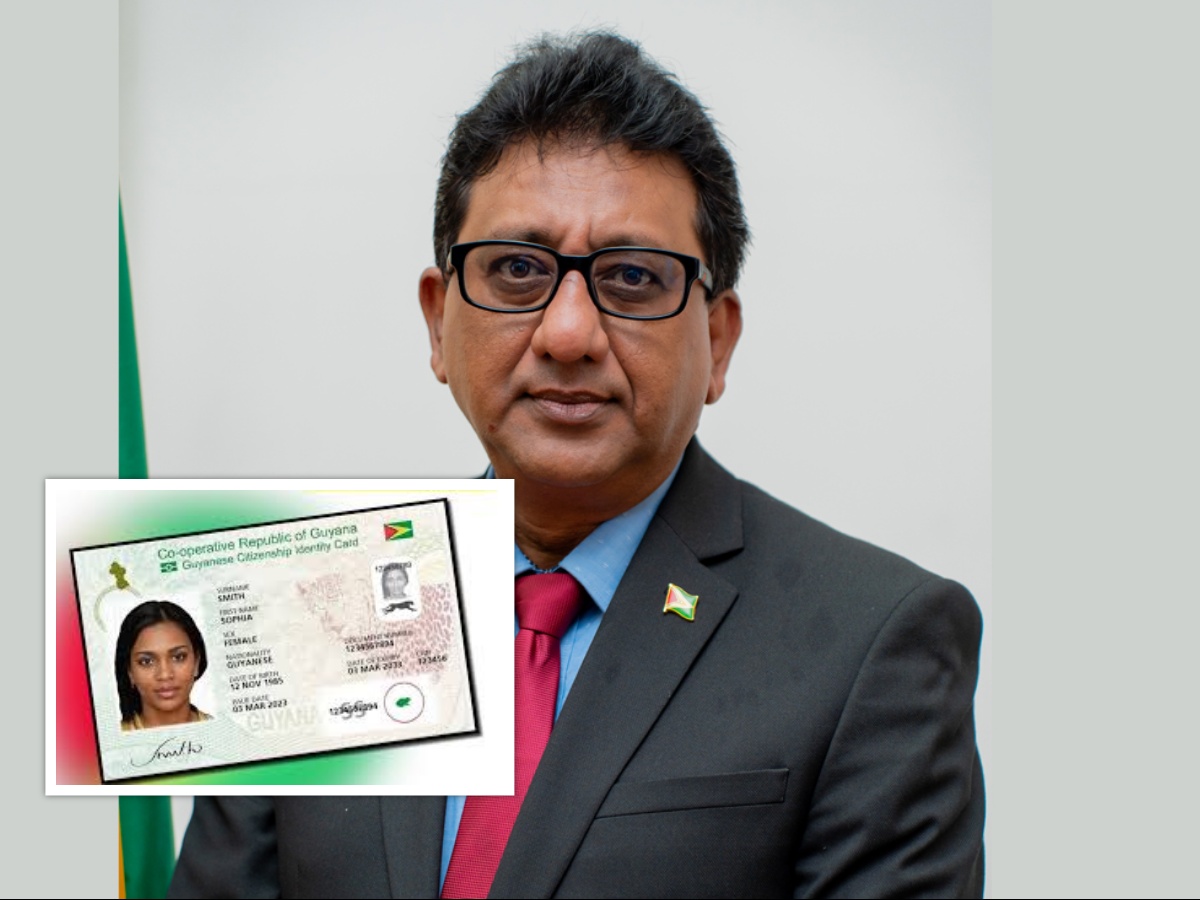
Attorney General Anil Nandlall is putting businesses and institutions on notice that refusing to accept Guyana’s new digital identification card as a valid form of identification is a breach of the law and could attract enforcement action, including intervention by the police.
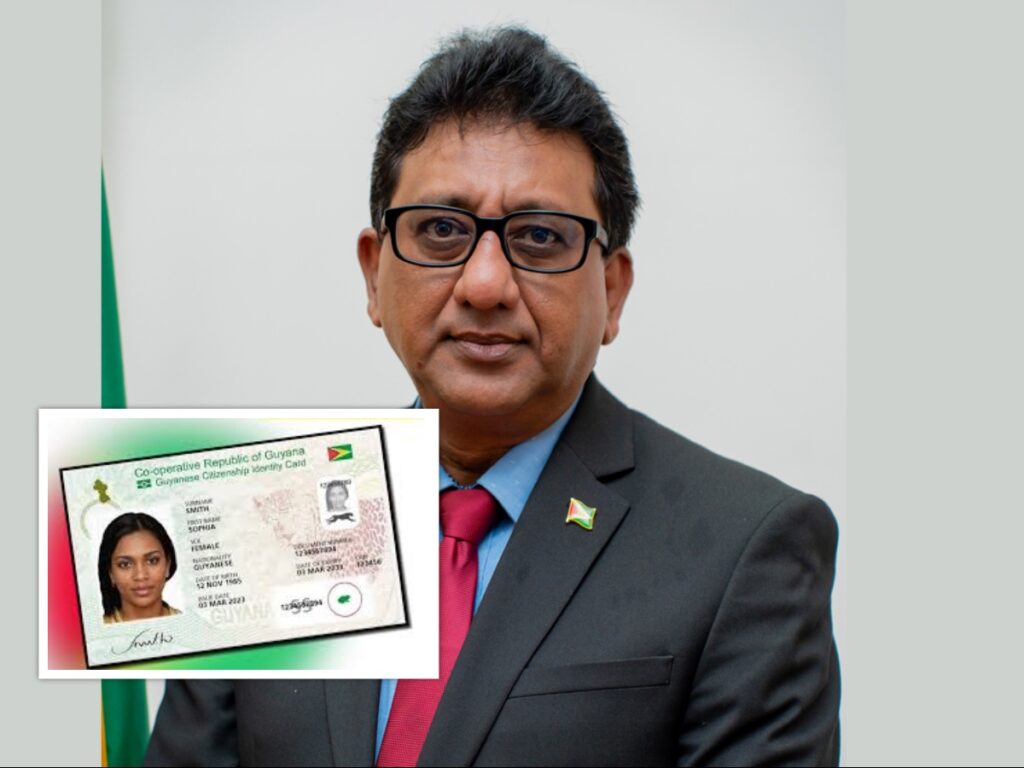
The warning came after a complainant reported being turned away at a local bank, where staff refused to recognise the digital ID card despite being informed that the Digital Identity Card Act had come into full force. The individual was told the bank was “not recognising this card right now” and that only a national ID card or passport would be accepted. The transaction was eventually completed using a driver’s licence.
Nandlall was unequivocal in his response.
“Ignorance of the law is not an excuse,” he told News Room on Thursday, pointing to Section 6 of the Digital Identity Card Act, which clearly establishes the card as a legally sufficient form of identification for conducting business with both public and private sector entities, whether in person or online.
“The law says very clearly that the card is a sufficient and lawful form of identification to conduct any business. The agency or entity that refused to use the card is violating the Act,” he said.
The Digital Identity Card Act came into full operation at the end of March 2026 through a commencement order issued by Prime Minister Mark Phillips. Nandlall noted that the legislation provides for consequences of a penal nature where its provisions particularly those establishing the card’s legal authority — are not complied with.
The Attorney General stressed that all sectors, including banks, businesses, and public agencies, have a responsibility to familiarise themselves with new legislation once it is enacted and published in the Official Gazette.
“The purpose of publication is to give the world notice of the content of the law. That is followed by the principle that ignorance of the law is not a defence,” he said.
Nandlall further warned that continued non-compliance will not be tolerated and that law enforcement may be called upon to intervene if resistance persists.
“If there continues to be non-compliance, then the police force will have to be informed and directed to ensure that the law is complied with,” he said.
While acknowledging that this was the first complaint of its kind brought to his attention, the Attorney General recognised that sustained public education will be necessary as Guyana transitions to the new digital identification system.