





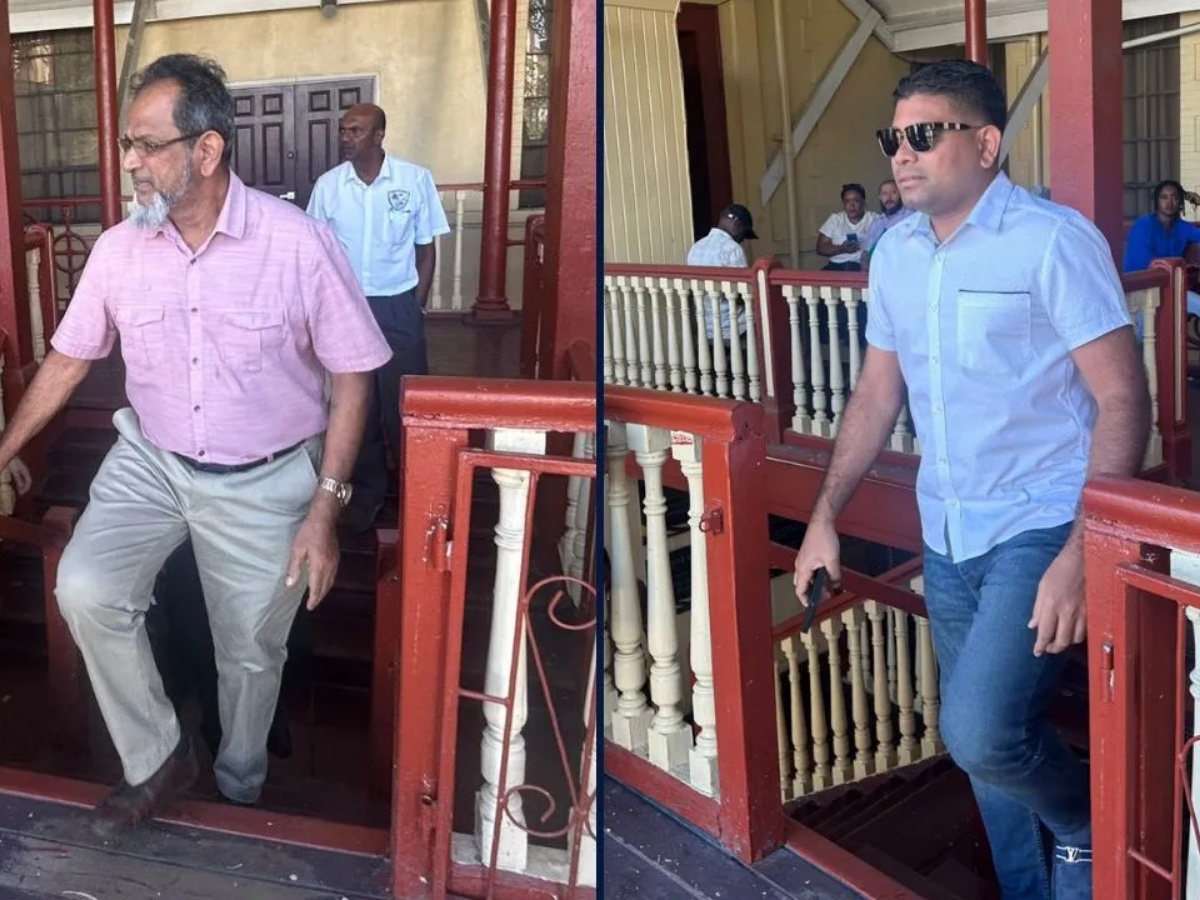
News Room Guyana Reports | The extradition hearing for U.S.-indicted businessmen Nazar and Azruddin Mohamed continued on Monday, with both the prosecution and defense presenting submissions regarding constitutional issues raised during the proceedings.

Lead Prosecutor Terrence Williams mounted a robust rebuttal against the constitutional challenge presented by the Mohameds’ legal team, stating that citizens have no inherent constitutional right to a specialty arrangement in extradition. He characterized the defense’s application as “premature” and lacking legal foundation.
The defense team is contesting recent amendments to the Fugitive Offenders Act, asserting that these changes violate the Mohameds’ rights to liberty and jeopardize their ability to secure a fair legal process. They have requested that the issue be escalated to the High Court for adjudication.
However, Williams argued that the rights claimed by the defense are not pertinent at this stage of the extradition hearing. He clarified that while specialty is a restriction, it does not constitute a constitutional right, stating, “Parliament establishes the restrictions and can therefore qualify them.”
Williams further emphasized that the recently disclosed diplomatic note, dated December 5, provided assurance from the United States that no third-party extradition would occur, thereby rendering the defense’s claims moot. He stated, “We need not look any further for provisions on the specialty principle.”
Additionally, he asserted that Section 153(3) of the Constitution was not triggered since the defense’s arguments did not raise any legitimate constitutional questions. “The matter of specialty does not arise in these proceedings,” Williams concluded.
Prosecutor Herbert McKenzie supported Williams’ assertions, describing extradition as a “hybrid construct” involving both the executive and judiciary, rooted in treaty obligations and the rights of the State. He noted that extradition proceedings are uniquely governed by constitutional provisions.
Earlier in the hearing, the defense had argued that the amendments compromised the Mohameds’ right to due process and sought additional time to respond to the prosecution’s oral submissions. Magistrate Judy Latchman granted the request, allowing the defense until Tuesday, December 9, to submit their written response. However, she stressed that a ruling on the constitutional submissions would proceed on Wednesday, December 5, regardless of whether the defense files its response.
The defense also expressed concerns over the late disclosure of the diplomatic note, indicating it introduces new evidentiary issues that could necessitate additional witnesses.
The Mohameds remain on $150,000 bail each. The U.S. government requested their extradition on October 30, 2025, under the extradition treaty between Guyana and the United Kingdom. They are facing multiple charges stemming from an indictment unsealed on October 6, 2025, involving wire fraud, mail fraud, money laundering, conspiracy, and customs-related violations linked to an alleged US$50 million gold export and tax evasion scheme.