
The Government of Guyana has finalized a new two-year agreement with the Turkish firm Karpowership for the continued rental of two floating power plants. Under this agreement, Guyana will pay an increased rate for the 36-megawatt (MW) powership currently stationed in the Berbice River, effectively standardizing the cost for both vessels.
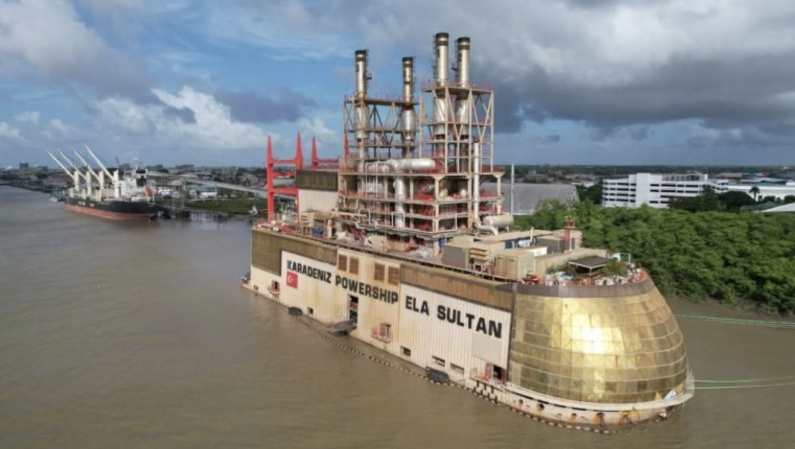
Rate Harmonization: The rental rate for the 36-MW vessel, previously secured at a concessional rate of approximately US$0.076 per kilowatt-hour (kWh), has been increased to US$0.095 per kWh. This matches the rate already being paid for the second, 60-MW vessel operating in the Demerara River.
Financial Impact: The adjustment represents an increase of US$0.019 per kWh for the 36-MW ship. This change is estimated to cost the national treasury an additional US$15,760 (approximately G$3.4 million) daily, raising the annual rental bill for that vessel by roughly US$5.8 million.
Duration: The contract renewal secures the service of both powerships for an additional two years.
Negotiation Context: The agreement follows intense, multi-week negotiations. Karpowership had reportedly issued an ultimatum to the Ministry of Public Works, threatening to disconnect its assets from the national grid if commercial rates were not harmonized. The previous foundational agreement for the first vessel had expired on May 21, 2026, leading to a period of short-term extensions while the new terms were finalized.
The government views the continued rental of these powerships as a necessary bridge to ensure grid stability while awaiting the completion of the flagship Wales Gas-to-Energy (GTE) project. Originally slated for completion in 2024, the GTE project—which is expected to provide 300 MW of power—is now projected to begin electricity generation in the first quarter of 2027.
While the government has emphasized its efforts to secure the “best possible commercial rate” to avoid power shortages, the deal has faced criticism regarding the increased costs and the lack of public disclosure regarding the specific clauses of the new contract.