
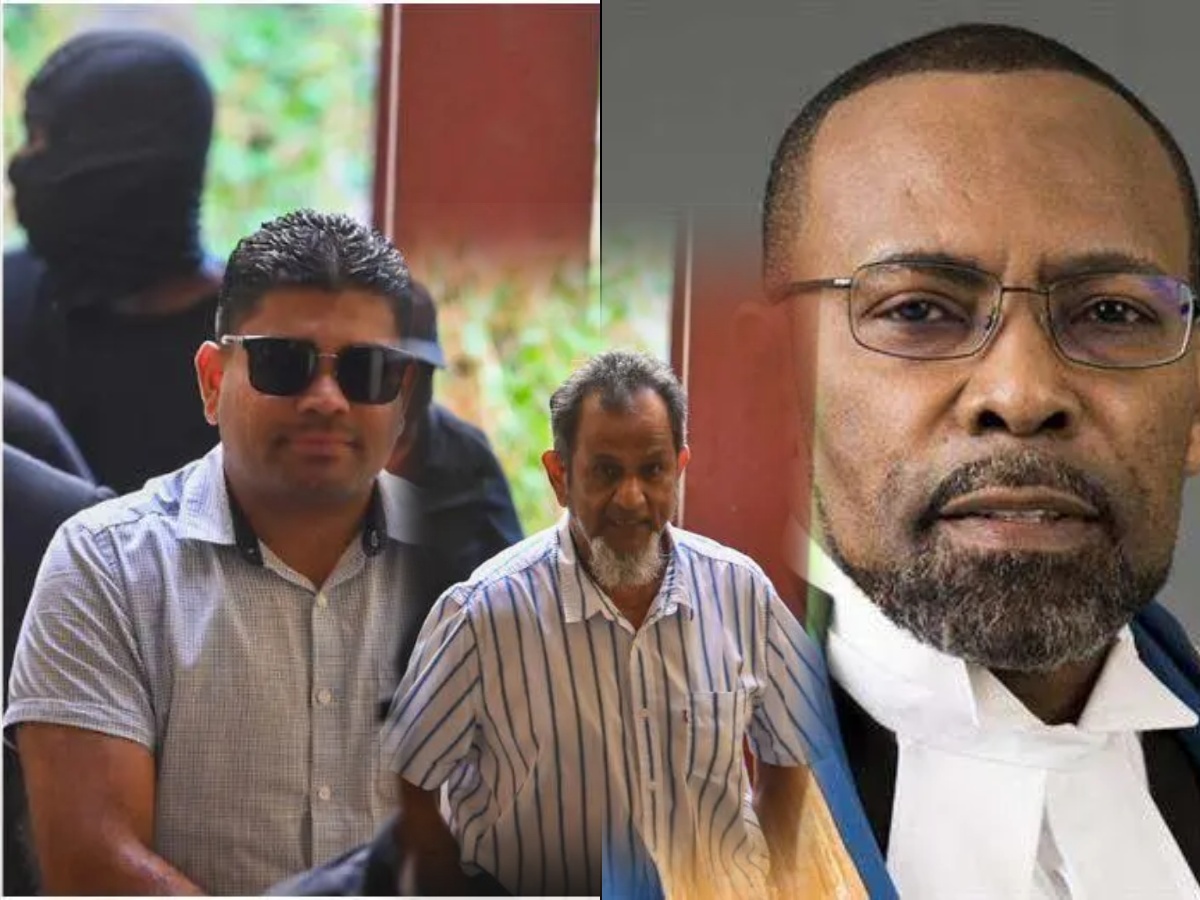
The Caribbean Court of Justice (CCJ) has reserved its decision in the extradition appeal brought by Nazar Mohamed and his son Azruddin Mohamed, following lengthy arguments before a full bench of the regional court on Tuesday.
In closing, the Court emphasised that the matter would be handled with expedition and that a ruling will be issued as soon as the Court is in a position to do so. The interim stay currently halting the extradition proceedings will remain in effect until the decision is delivered.
The bench, presided over by CCJ President Justice Winston Anderson, also cautioned attorneys on both sides to avoid public commentary that could undermine fairness or public confidence in the administration of justice, while noting that the Court does not regulate such statements.
The appeal challenges the legality of the extradition process initiated against the Mohameds, including allegations that Minister of Home Affairs Oneidge Walrond was biased in issuing the Authority to Proceed (ATP). The judicial review application underpinning the appeal had already been dismissed at both the High Court and Court of Appeal levels in Guyana.
During the hearing, Trinidadian Senior Counsel Fyard Hosein, leading the defence alongside Roysdale Forde and Siand Dhurjon, argued that procedural fairness must apply from the earliest stage of the extradition process, including the minister’s decision to issue the ATP, and that bias at that preliminary stage undermines the entire proceedings. However, the bench pressed counsel on whether such issues could instead be addressed at later judicial stages, including committal proceedings or habeas corpus review. Hosein conceded under questioning that no specific unlawful act had been identified beyond the bias allegation itself.
Senior Counsel Roysdale Forde added that even if bias were established, the matter could be remitted to another impartial decision-maker rather than bringing the extradition process to an end entirely.
Appearing for Minister Walrond, Trinidadian Senior Counsel Douglas Mendes argued that the applicants had effectively waived any objection to the minister’s involvement by engaging her office before the ATP was issued, and that her role at this stage is administrative rather than adjudicative. He maintained that the defence had failed to identify any substantive ground on which the extradition could be considered unlawful.
Attorney General Anil Nandlall, SC, described extradition as a process grounded in international law and treaty obligations, arguing that the minister’s function is executive and administrative in nature and does not attract the full application of natural justice principles. He denied making improper public comments about the matter, stating that his remarks had been taken out of context.
With arguments concluded, the CCJ is expected to deliver its ruling in due course.